The Three Numbers You Need
Everything in smelting comes down to three rates. Learn these and every ratio below is derivable.
| Item | Rate | Notes |
|---|---|---|
| Basic belt | 7.5 items/sec | 15 items/sec per lane |
| Fast belt | 15 items/sec | Double |
| Express belt | 22.5 items/sec | Triple |
 Stone
Stone furnace
Stone
Stone furnace | 0.3125 plates/sec | 1 plate per 3.2s |
 Electric
 furnace
Electric
Electric furnace | 0.625 plates/sec | 1 plate per 1.6s |
 Steel
Steel furnace
Steel
Steel furnace | 0.625 plates/sec | Same as electric, no module slots |
An electric furnace is exactly twice a stone furnace. That single fact generates the whole table below.
Iron and Copper: Furnaces Per Belt
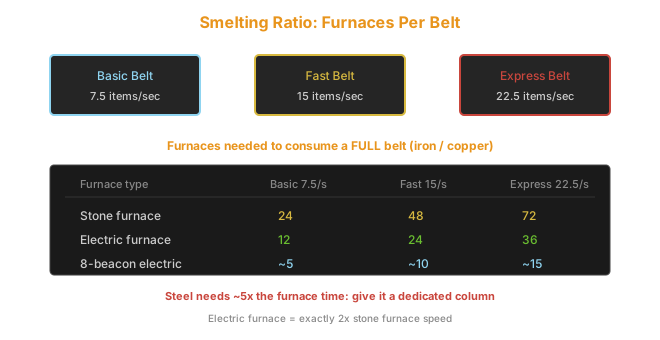
Iron and copper share identical smelting times, so one table covers both.
| Belt Type | Items/sec | Stone Furnaces | Steel Furnaces | Electric Furnaces |
|---|---|---|---|---|
| Basic (half) | 3.75 | 12 | 6 | 6 |
| Basic (full) | 7.5 | 24 | 12 | 12 |
| Fast belt | 15 | 48 | 24 | 24 |
| Express belt | 22.5 | 72 | 36 | 36 |
The rule of thumb: one full basic belt of iron ore fits exactly 24 stone furnaces, or 12 electric furnaces. Fast belt doubles it, express triples it.
| Belt | Stone | Electric | Space Needed |
|---|---|---|---|
| Basic | 24 | 12 | Compact column |
| Fast | 48 | 24 | Split into two columns |
| Express | 72 | 36 | Three columns + balancers |
Steel: The Ratio Everyone Gets Wrong
Steel is where most bases break down. The recipe takes 5 iron plates and 17.5 seconds in a stone furnace.
| Setup | Steel/sec per Furnace | Furnaces for Full Belt |
|---|---|---|
| Stone furnace | 0.057 | 131 for a basic belt |
| Steel furnace | 0.114 | 65 for a basic belt |
| Electric furnace | 0.114 | 65 for a basic belt |
| Beaconed electric | ~0.5 | 15 for a basic belt |
Never try to make bulk steel with stone furnaces. You would need over 130 of them to fill a single belt, which is more than most bases build in total.
| Mistake | Consequence |
|---|---|
| Steel on a shared iron line | Starves everything downstream |
| Too few steel furnaces | Steel trickles, blocking progression |
| No dedicated steel line | Constant rebuilding |
Give steel its own furnace column fed from an iron plate belt, separate from your main iron smelting.
Layout That Upgrades Without Rebuilding
The single best design decision in Factorio smelting is leaving room to upgrade.
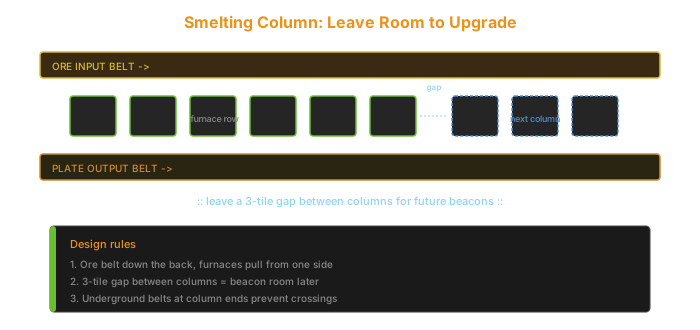
| Design Element | Why It Matters |
|---|---|
| Ore belt down the back | Furnaces pull from one side, output the other |
| Plate belt down the front | Direct feed to bus or train |
| 3-tile gap between columns | Room for beacons later |
| Underground belts at column ends | Prevents belt crossings |
Leave a 3-tile gap between furnace columns from day one. Retrofitting beacons into a cramped layout means tearing the whole thing down.
Furnace Type Comparison
| Furnace | Speed | Fuel | Modules | When to Use |
|---|---|---|---|---|
|
Stone
Stone | 0.3125/sec | Any | No | First hour only |
|
Steel
Steel | 0.625/sec | Any | No | Before electric, good upgrade |
|
Electric
Electric | 0.625/sec | Electric | Yes | Main line once you have power |
| Beaconed electric | ~2.5/sec | Electric | Yes | Megabase |
Stone furnaces are fine for your first hour. Switch to steel furnaces as soon as you can craft them - it doubles throughput for free with the same footprint.
Beaconed Smelting (Megabase)
With speed module 3 in furnaces plus speed beacons:
| Setup | Plates/sec per Furnace | Furnaces Per Half Belt |
|---|---|---|
| Unbeaconed electric | 0.625 | 12 |
| 8-beacon electric | ~2.5 | 3 |
| 12-beacon electric | ~3.0 | 2.5 |
Beaconed smelting cuts your furnace count by roughly 75%, which is why megabases use it. See the beacon and module guide for the layout.
Related Guides
- https://factorioguides.com/base-design/main-bus-guide/ - matching bus width to furnace output
- https://factorioguides.com/production-ratios/beacon-module-guide/ - beacon layouts for megabase smelting
- https://factorioguides.com/science-packs/red-science-guide/ - how many furnaces feed red science
Community Verification and Resources
- Factorio Wiki: Furnace - official crafting speeds and fuel values
- Factorio Cheat Sheet - community-verified ratio tables
Last updated: 2026-09-26 | Verified against Factorio 2.0.